
06 Jun Unfinished, a summary
In the last project I have been working on I relied on photogrammetry. Given the fact that it was impossible for me to see or measure the object I needed for post I knew it was a reliable method for 3D data acquisition. It is a technique I wanted to use for a while and this was the perfect timing. I also wanted to explore the possibilities and see how it can be added into my workflow.
I’ve also had the opportunity to learn how to do fire in Maya fluids.
I’d like to write about some of the workflows I’ve followed as well as name a few of the things I’ve learnt/discovered in the process.
Photogrammetry
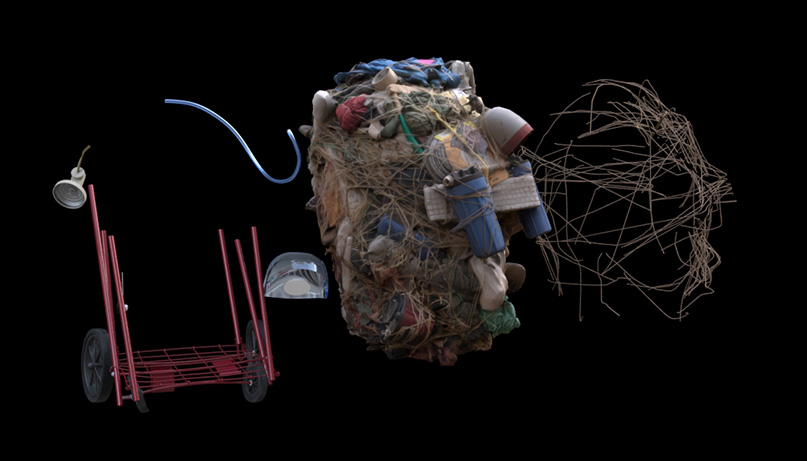
The short film by Rafa Salazar required the use of a real sculpture by artist Mary Mattingly to be part of the story. As the narrative asked for the sculpture to be mistreated -thrown from the sky or to be burned- we decided to recreate the sculpture in 3D. As I wasn’t going to be on set I asked the director if he was able to take pictures of it.
The first problem we encounter was that it wasn’t possible to be photographed from all angles at once so the director took pictures around the sculpture first and then lay it down on the floor to get the details of the bottom. With this pictures we obtained two separate solves.
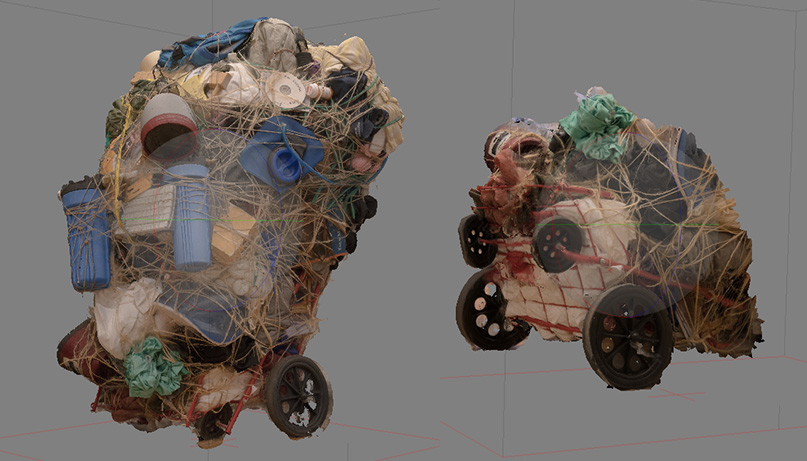
I imported both models in C4D, convert them to quads and combine them. Also delete some parts I was going to recreate later. Then I sent the ‘blob’ to zBrush where I was able to close all holes, reduce the polygon count and clean the model properly.
One of the best thing of photogrammetry is that you get the volume and the textures. However, with all the manipulation the uv coordinates had been messed up and were pretty unusable so I decided to create a new set of uv coordinates. Looking for a way of transferring the textures from the old model to the new one I stumble upon xNormal. Problem solved! With this program I could transfer the textures from the old to the new model quite easily. It can also generate AO and Normal maps from an .OBJ. It is a powerful little program. Sadly it is only for Windows.
Once the textures were done I model all the missing parts, create the shaders and put all the pieces together.
Poor man’s lidar
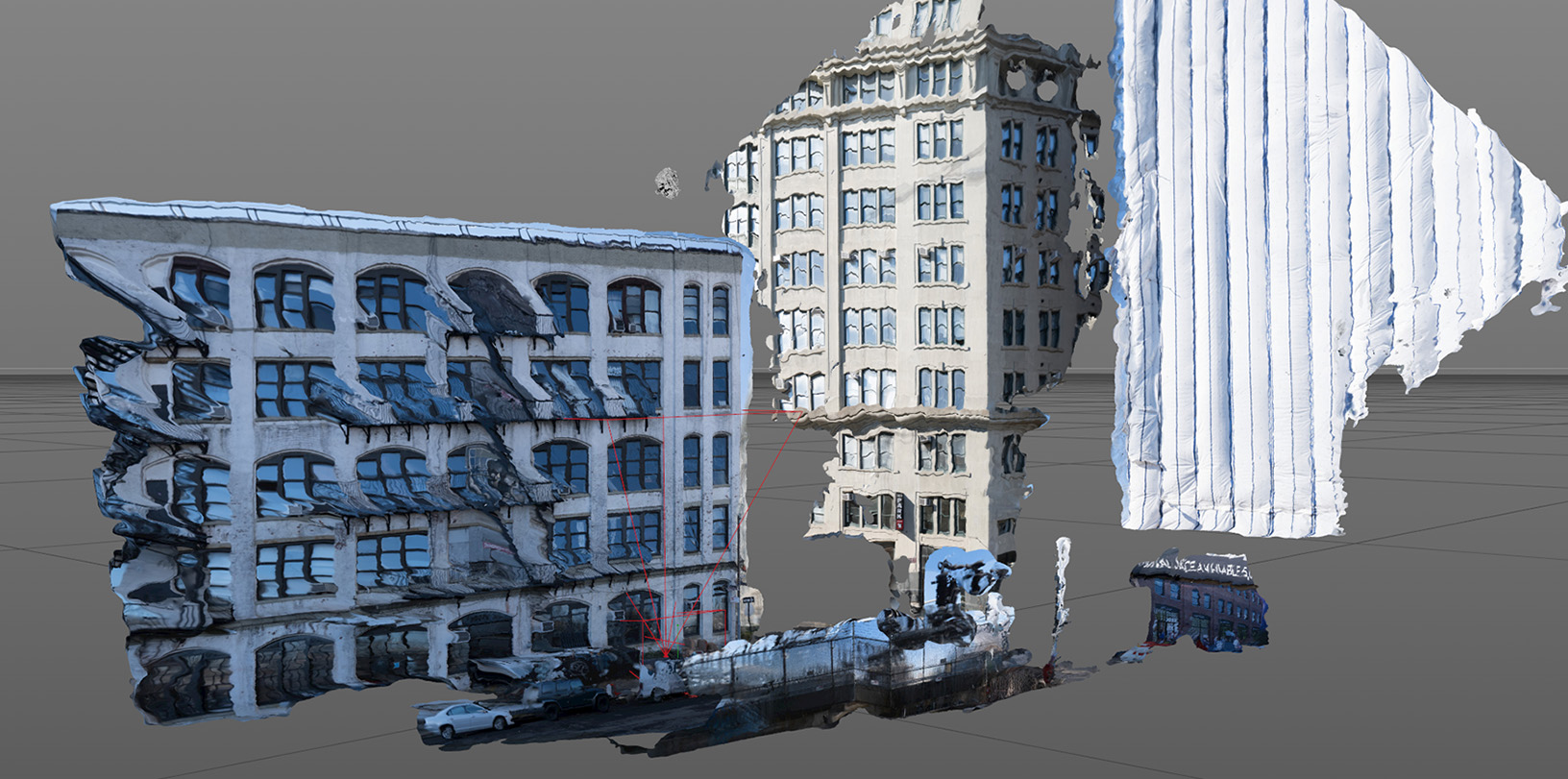
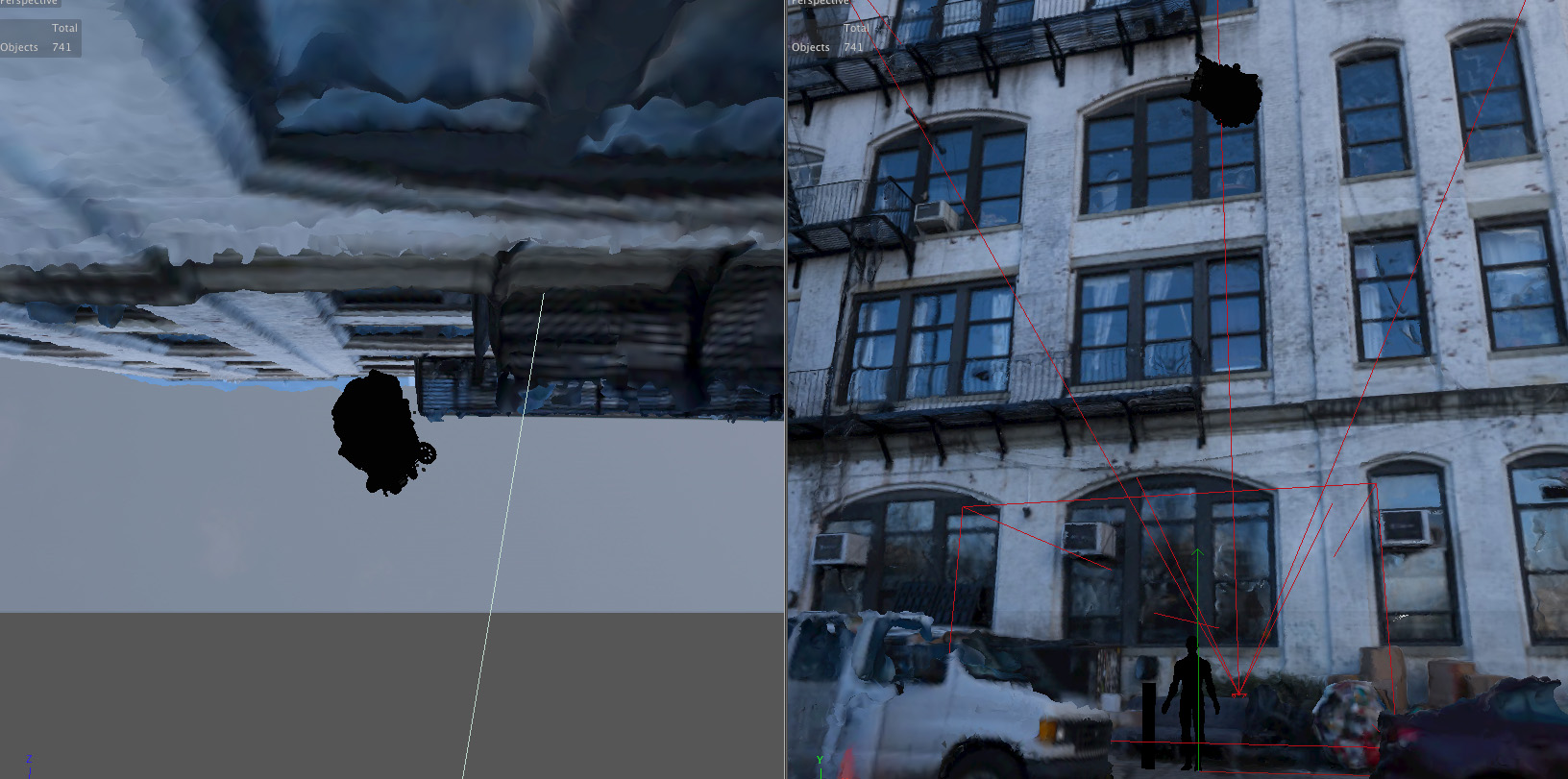
During the project I also discover another use for photogrammetry. As I had asked the director for a panoramic of the area in order to recreate the light of the environment in 3d for the scene and for the reflections I had a bunch of pictures and decided to try to solve them in Photoscan. What I got was a scaled down representation of the whole environment so I could place the cameras easily and faithfully.
Maya Fluids
As I’m transitioning to Maya from C4D and learning it every day this was a good occasion to learn how to use fluids within the FX module. The good thing is that it seems that usually all fluid systems employ similar parameters changing the way it create the fluid or improving quality or speed, so I hope this knowledge is useful in the future. As I had no previous idea were to start I needed to learn the basics of temperature, fuel and so on. I watched a ton of tutorials on youtube. This was the result I liked the most after several tests:
I enjoyed a lot playing with fluids within Maya and look forward to learn nParticles and combine these with fluids.
No Comments